
The High Altitude Miracle: Blossoms of the Subalpine
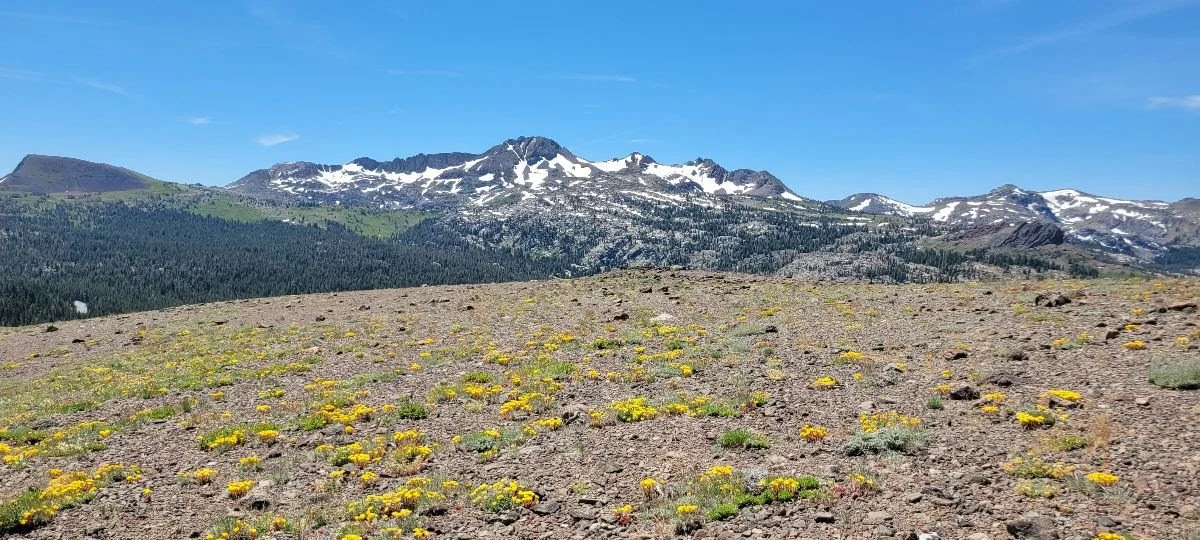
Carson pass with a view of Roundtop
Accessing the subalpine ridge of the Carson range with Molly Ferry, a botanist and ecological consultant, we were greeted by a spectacular display of wildflowers that transitioned into a treasure hunt once we entered the rocky alpine terrain with low-lying alpine plants. At a first glance, most of these look miniscule and fragile hugging the ground to stay out of the path of freezing winds since there are barely any shrubs or trees to help buffer against savage weather. In reality, approximately two-thirds of the plant's biomass is underground to help store moisture and nutrients in a protected place, keeping it from freezing.
Many alpine plants develop dense, wool-like hairs that trap a layer of warm, insulating air tightly around the plant, serving as a thermal blanket against freezing nighttime temperatures. The fine, silvery hairs act as reflective mirrors, bouncing back the intense, damaging ultraviolet radiation that bombards the high-altitude treeline. High alpine scree and granite cracks hold little water. As a result, these plants send down deep, extensive root systems to anchor themselves securely and tap into groundwater.
Here are some of the native low-lying, rocky terrain wildflowers typically spotted in the high-altitude section of the Carson range. For more information, check out Molly Ferry’s work of the Tahoe Plant Book project funded by Tahoe Fund and in partnership with Tahoe Institute for Natural Science.
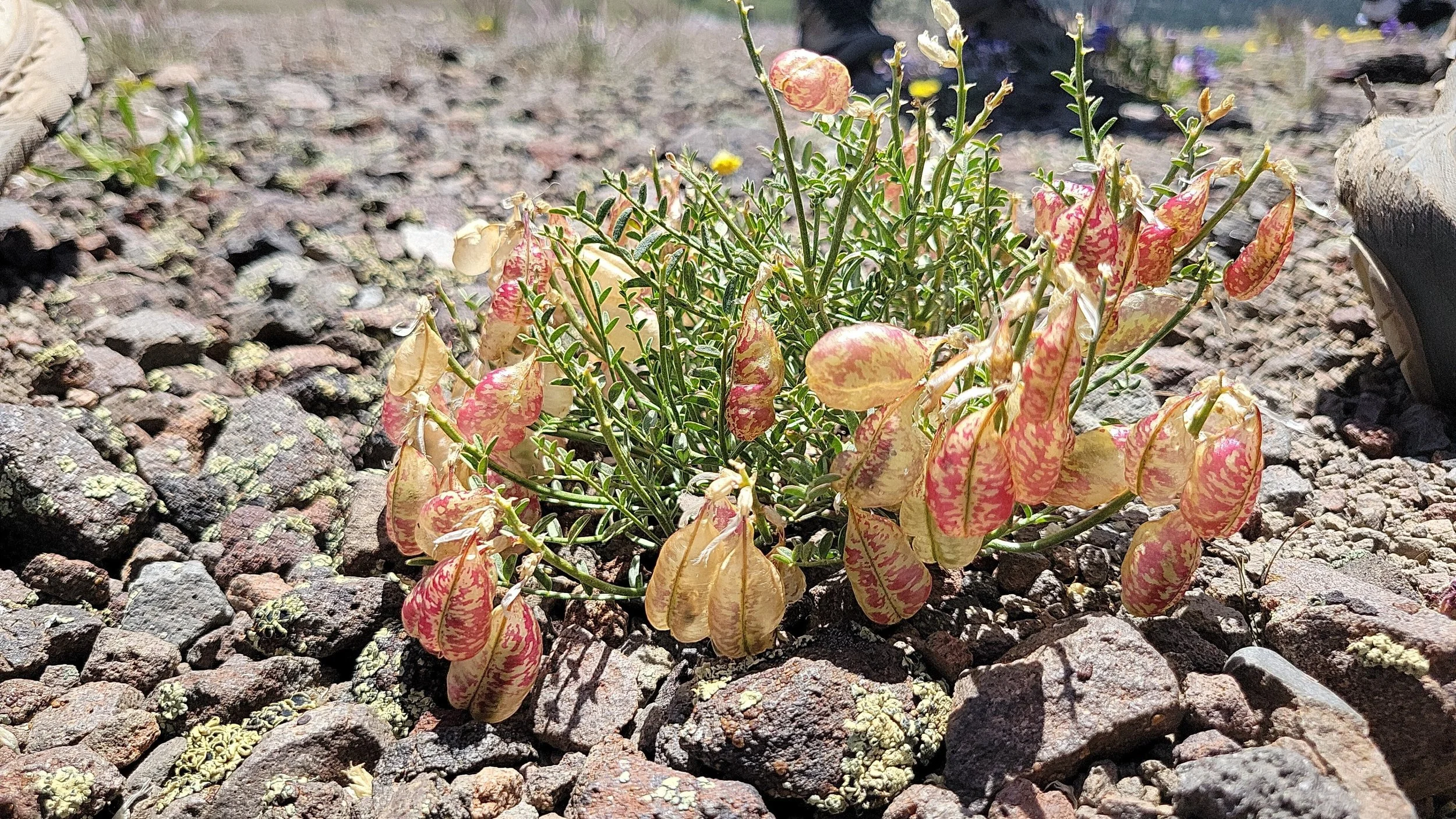
Astragalus whitneyi
(balloon-pod milk-vetch)
The "balloons" of the milk-vetch are the fruit that produces seeds. Once they dry out, they become light enough to be blown in the wind. Upon colliding with rocks, they burst and release their seeds.
Source: Balloonpod Milkvetch - Calscape
https://www.florafinder.org/Species/Astragalus_whitneyi.php
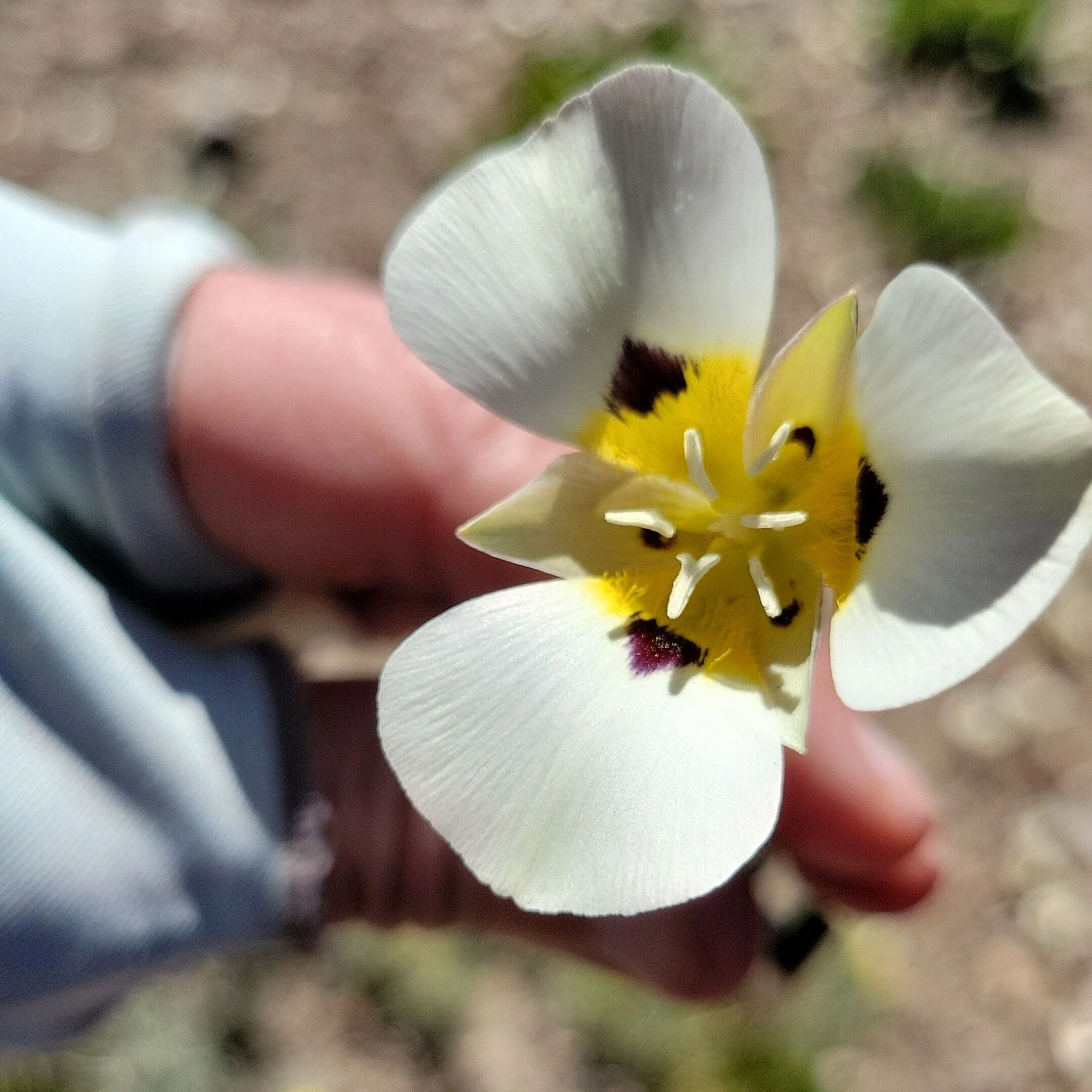
Calochortus leichtlinii
(Mariposa Lily)
Pioneers in harsh soils and they need to be well drained to prevent bulb rot.
Produces a starchy, edible bulb long valued by Indigenous people.
It's well adapted to cold winters, moist springs, and dry summers, representing one of the most northerly and frost-hardy Calochortus species.
The showy flowers are white, pinkish or dull blue in color and spotted with yellow and dark red or black hairs inside.
Source: Leichtlin's Mariposa Lily - Calscape
Leichtlin’s Mariposa Lily (Calochortus leichtlinii)
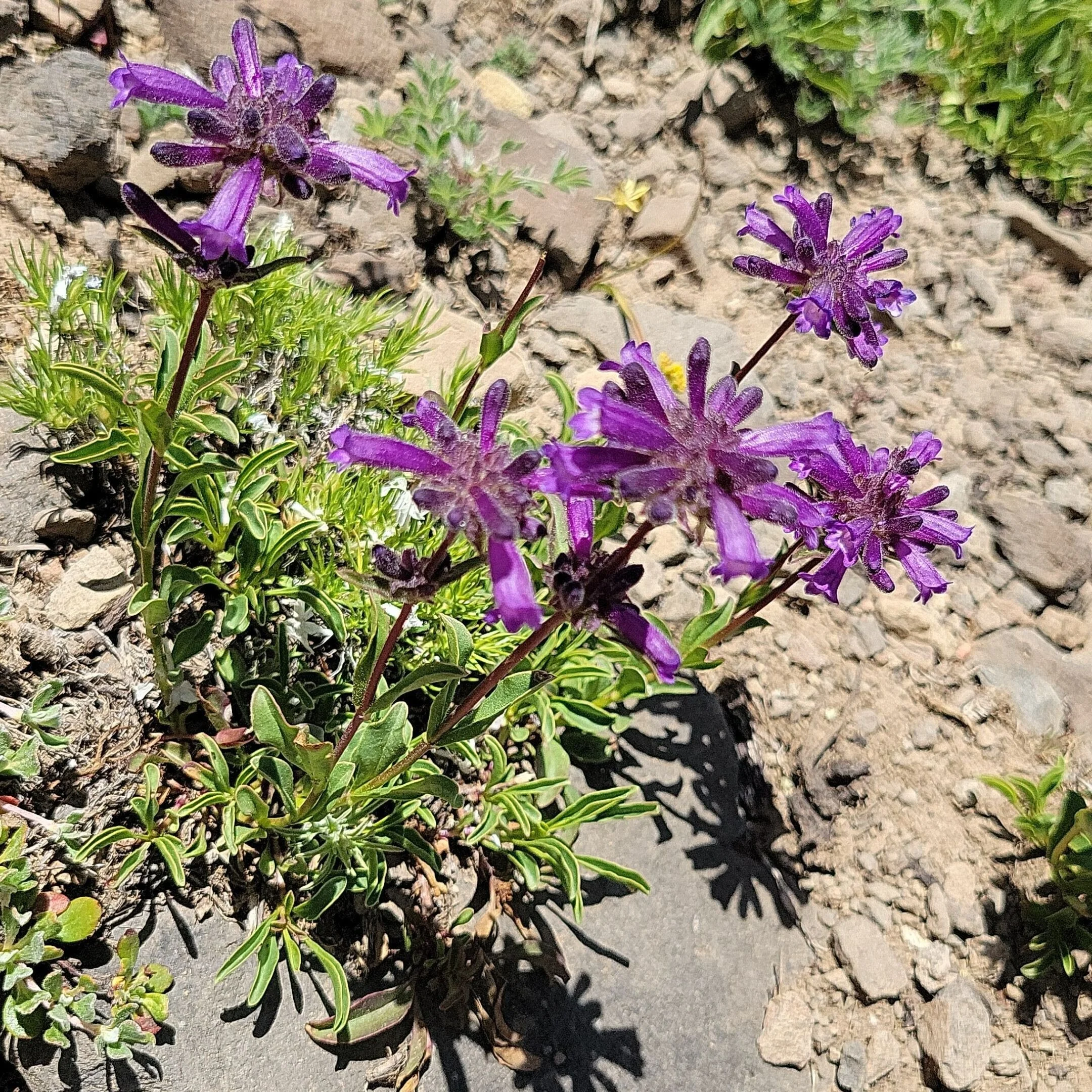
Penstemon heterodoxus
(Sierra Beardtongue)
To survive intense solar radiation and retain water, the leaves are typically small, thick, and folded lengthwise upward along the midrib.
The signature tubular shape features a hairy staminode that forces the bees to push into the flower, coating them in pollen to pollinate surrounding plants.
Source: Sierra Beardtongue - Calscape
Pretty Penstemon Varieties for Pollinators in the Southern Plains - Fine Gardening
A Guide to Native Penstemons - The Plant Native
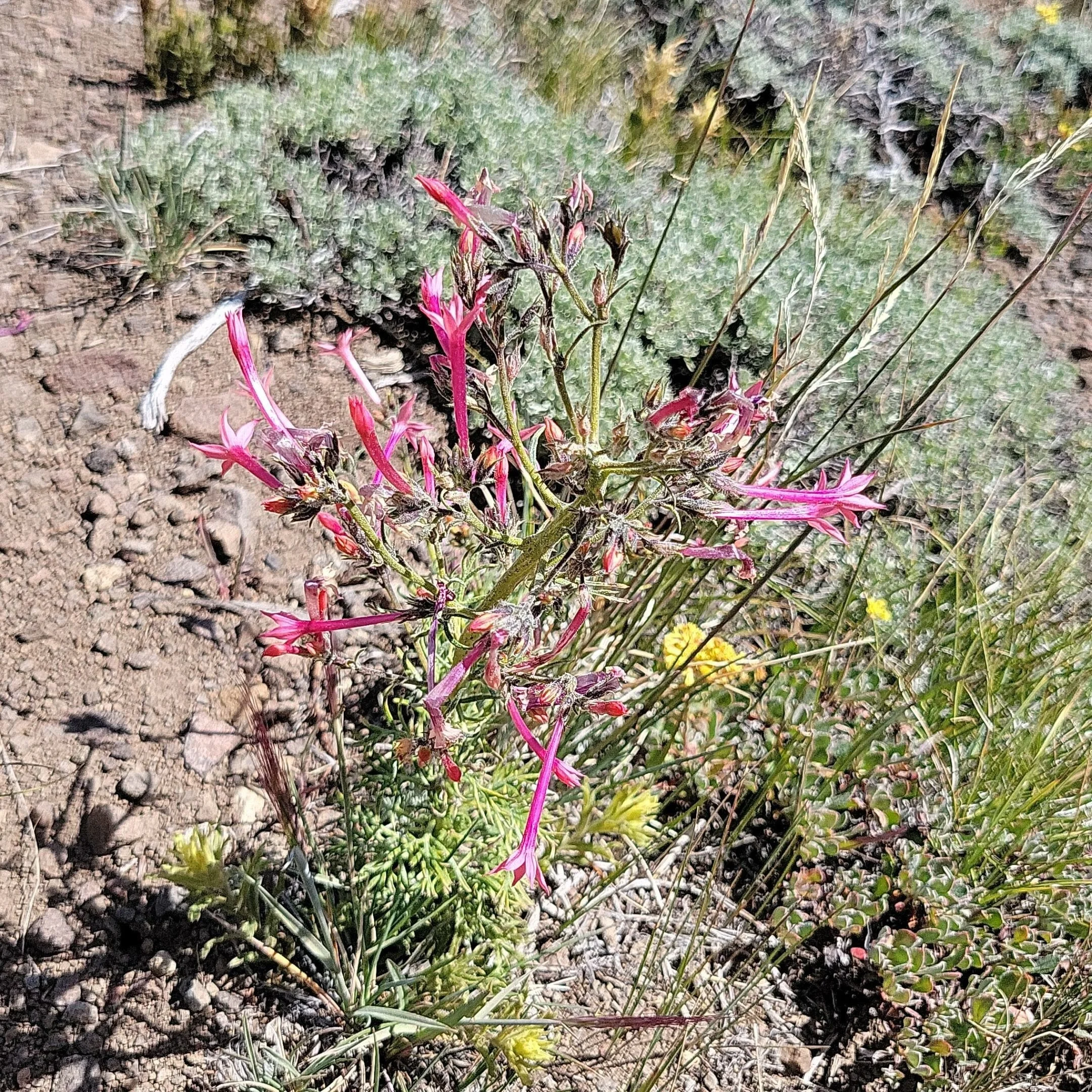
Ipomopsis tenuituba (Slendertube skyrocket)
Often confused with the Ipomopsis aggregata (scarlet gilia), but the slendertube has a much longer and narrower floral tube that houses the anthers inside it. It also grows at relatively higher elevations. By contrast, the scarlet gilia has its stigma and anthers exerted (protruded well beyond edge of petals), and it not at the upper limits of subalpine.
Pollinated by moths and butterflies.
Source:
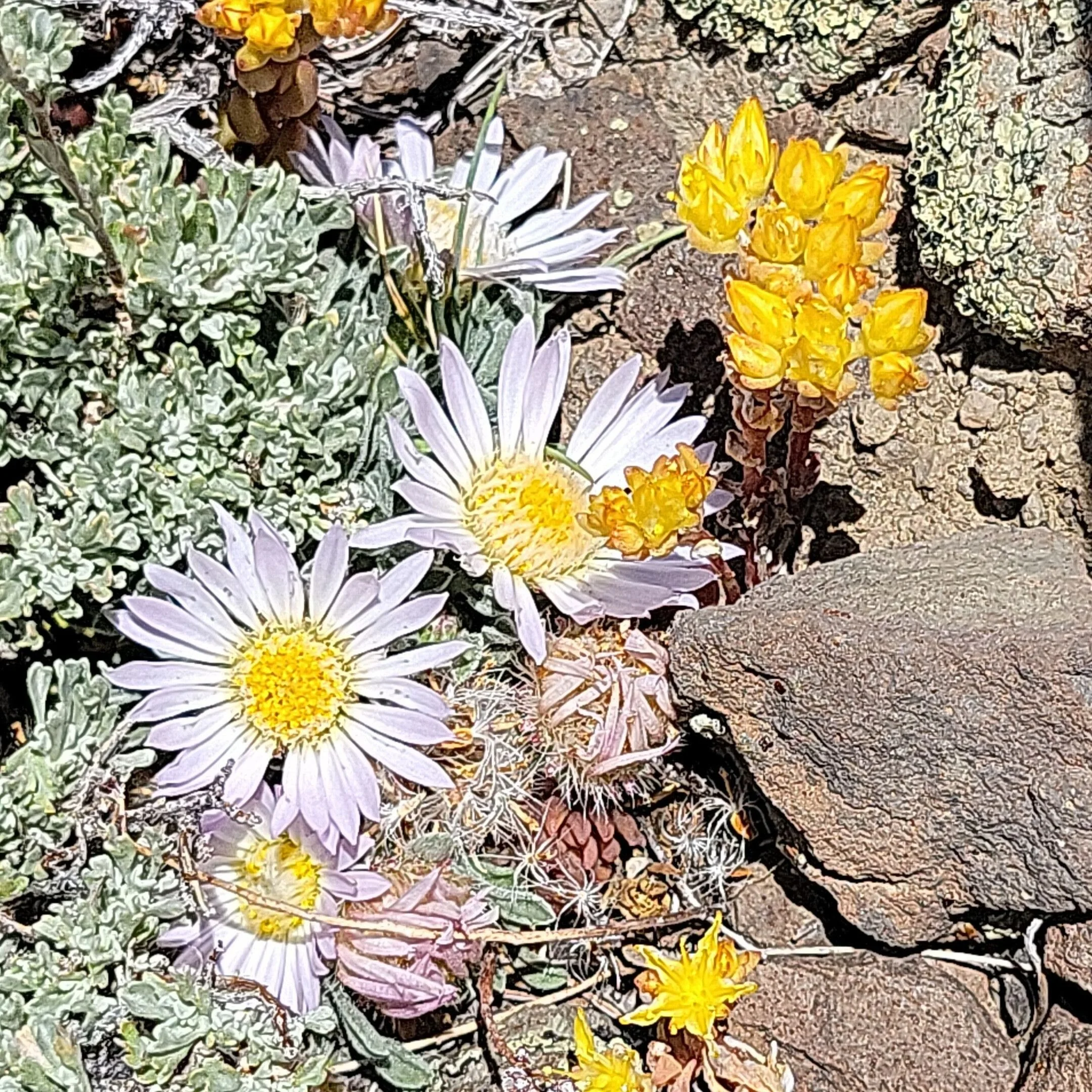
Townsendia scapigera
(Tufted Townsend daisy)
Perennial herb endemic to California. Herbage grows on a caudex and taproot unit. The caudex helps store water, nutrients to help the plant survive dry periods.
The inflorescence bears flower heads on erect peduncles, and each head has hairy phyllaries.
Source:
1458 Mt. Rainier Drive, South Lake Tahoe, CA 96150 | (650) 814-nine565 | admin@sugarpinefoundation.org
