
Reflection on Spring Planting
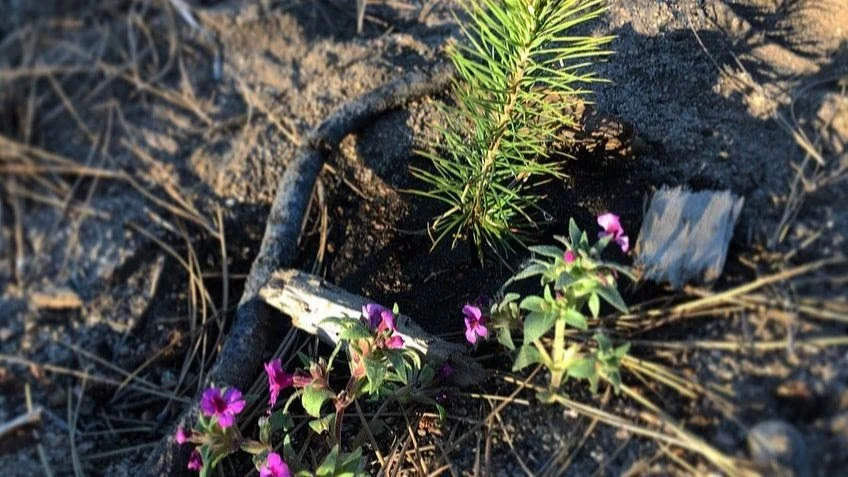
by Spencer Benlien
Sometimes a single afternoon in the forest can quietly redirect your whole life. For me, that afternoon began in a Lake Tahoe Community College class taught by Professor Sue Kloss, who introduced our class to the Sugar Pine Foundation, whose newsletter you are reading now. I remember enjoying the work from the start. Planting trees felt like I was doing something beyond myself, giving something back to the land and the planet. That experience stayed with me. The following semester, when LTCC launched its forestry program, I changed my degree, founded and led the LTCC Forestry Club, and eventually transferred to UC Berkeley to study Ecosystem Management and Forestry. After graduating, I returned home to beautiful Tahoe. Looking back, that afternoon did more than teach me how to plant a tree. It helped point me toward forestry, toward Berkeley, and eventually back home to Tahoe.
For a while, the Sugar Pine Foundation faded into the background as school, work, and life kept moving. Then one day, while walking a trail in Tahoe, I spotted a sugar pine and the memory came back. I went home, signed up to volunteer, and wrote a short note in the comment box about how I first learned about the organization. Not more than an hour later, I heard from Maria Mircheva, the Executive Director of the Sugar Pine Foundation, asking whether I would be interested in joining the planting crew for spring planting in April. My answer was an easy and enthusiastic yes.
On my first planting day, the crew met early in Meyers, went around introducing ourselves, and then carpooled up over Echo Summit to our first planting site. After all those years, I was back where it started, placing a tree into a hole and very quickly remembering that you can think you know how to plant a tree, but you could be wrong.
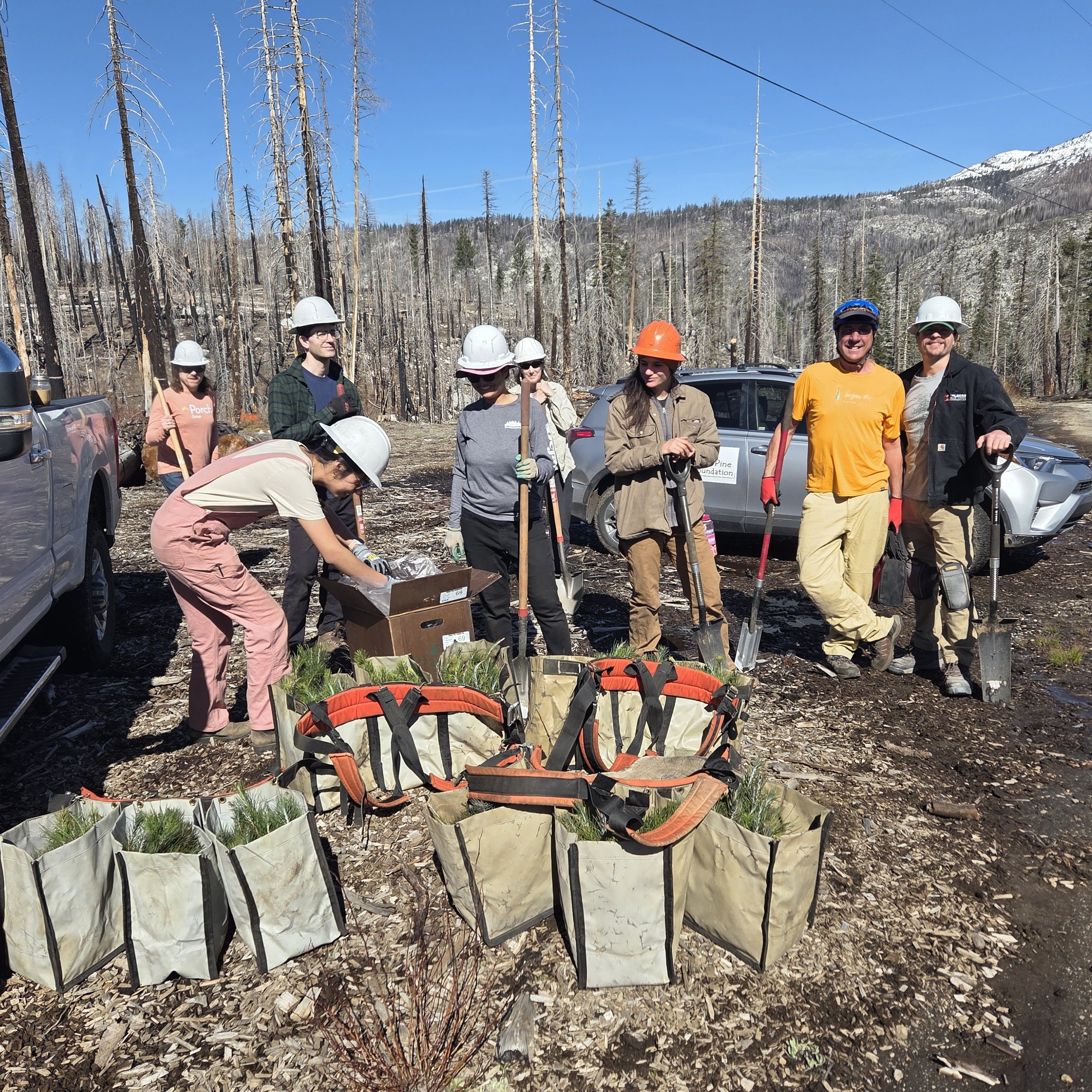
Our planting crew getting ready. The author, Spencer, is second from left to right.
You have to know the species, how it grows, whether it is drought tolerant or shade intolerant, what elevation it is suited for, and how the slope will affect its chances. A seedling planted on a south-facing slope may have a tougher time, so placement matters.Sometimes that means planting near a stump for protection or close to a nitrogen-fixing shrub like ceanothus, then lightly placing forest debris around the seedling to help hold moisture without blocking its ability to photosynthesize. I, on the other hand, do not photosynthesize, so even on cooler days, planting at higher elevation meant drinking water, eating snacks, reapplying sunscreen and remembering that restoration work is still hard outdoor work.
Maria took me aside to make sure I understood what to plant and where to plant it, reminding me that the Foundation plants more than just sugar pines. She has no problem letting you know when you are doing something wrong, but she is just as quick to praise you when you get it right. She has a warm, friendly demeanor, with a smile and laugh that make the work feel lighter. You pick up quickly that she loves what she does, and Tahoe would not be quite as wonderful without her or her work. Each planting day over April and into May felt like a real chance to give back to the Earth. I can still hear Maria as I type this: “Don’t place the seedling too low in the hole, and don’t place it too high either.”
Digging a hole may seem simple, but planting the future forest takes care and precision, especially when those trees will have to survive in a much harsher world than the forests before them. I came back to Tahoe looking for ways to be more involved in my community. Sometimes that starts with a shovel, a seedling, and the decision to show up for the place you call home.
1458 Mt. Rainier Drive, South Lake Tahoe, CA 96150 | (650) 814-nine565 | admin@sugarpinefoundation.org
